Written by David Mathiason, Raptor Banding Director
During the spring of 2025, we deployed another 23 Motus tags on Sharp-shinned Hawks, as part of our research effort to understand the impact of capillaria on these birds. As of December 2025, 19 of those birds have been detected coming south for the winter. One of them flew into a glass panel 5 days after it was banded – we were able to recover the tag from that bird and will re-deploy it next spring. That leaves only 3 birds that we have not heard from this past fall. That return rate, 19/23 = 83% is an incredible return rate, and those other three birds might still get detected at a future date. (They are sneaky birds.) The pictures and text below share the stories of two birds from last spring.
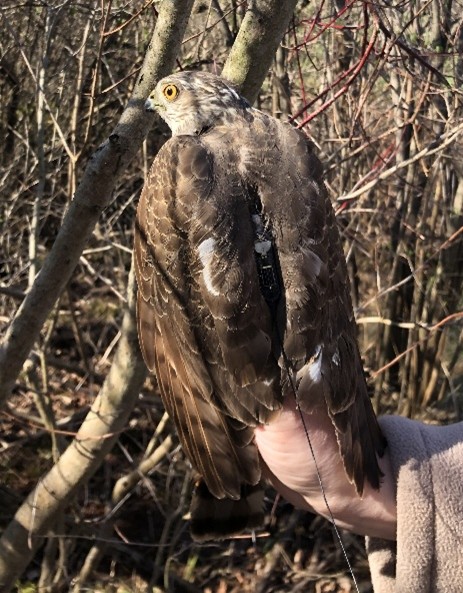
SSHA banded April 29, 2025, Motus ID #62475
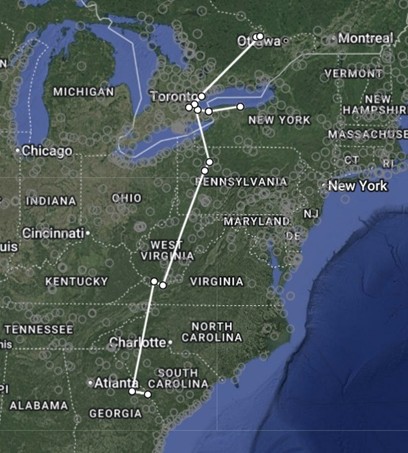
Most of the hawks we band continue their journey eastward around Lake Ontario. This one decided to go west over the Niagara Peninsula before her last spring detection north of Ottawa on May 11. We don’t know how much further north she may have gone. On Sept 30, she was detected heading south at Bronte Creek Provincial Park, just north of Hamilton. From there she continued to the southeastern U.S. with her last detection (to date) being on Nov 4.
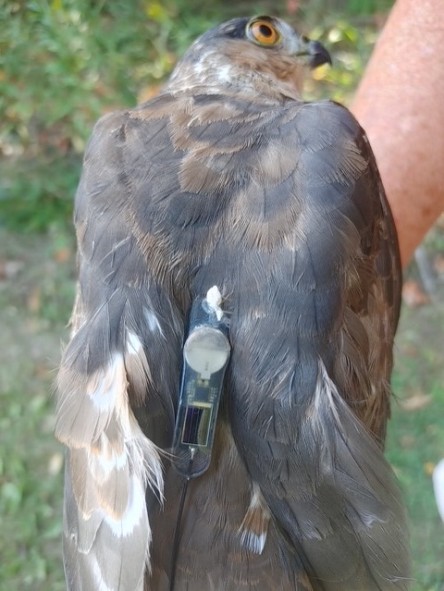
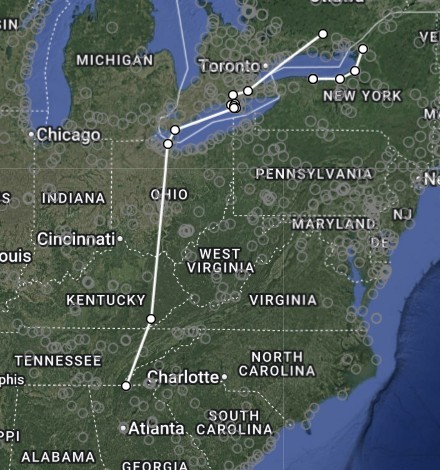
SSHA banded April 15, 2025, Motus ID #53201
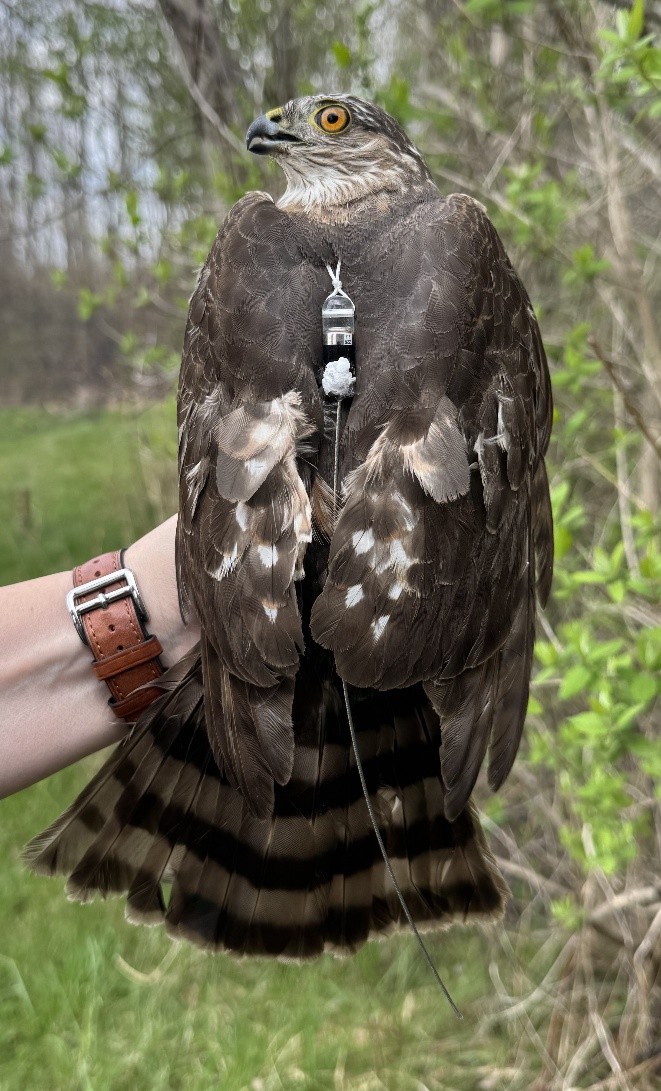
You can see on the map that this female went around Lake Ontario in the more common easterly direction. We cannot know how far north she went, but on Sept 11 she was detected coming south. She was detected by multiple towers in the area around Long Point on Sept 14, then captured two days later by the Hawk Cliff Raptor Banding Station west of there. On Sept 18 she crossed Lake Erie at Pt. Pelee and then continued south down to Georgia. It is typical that we stop getting detections once the bird has settled into its wintering area. We now have to wait and see what happens next spring. The second picture of her was taken by the crew who re-captured her in Canada. She is in the process of molting in her adult feathers and you can see the color contrast.
For more information on this study, go to our Sharp-shinned Hawk Project page.