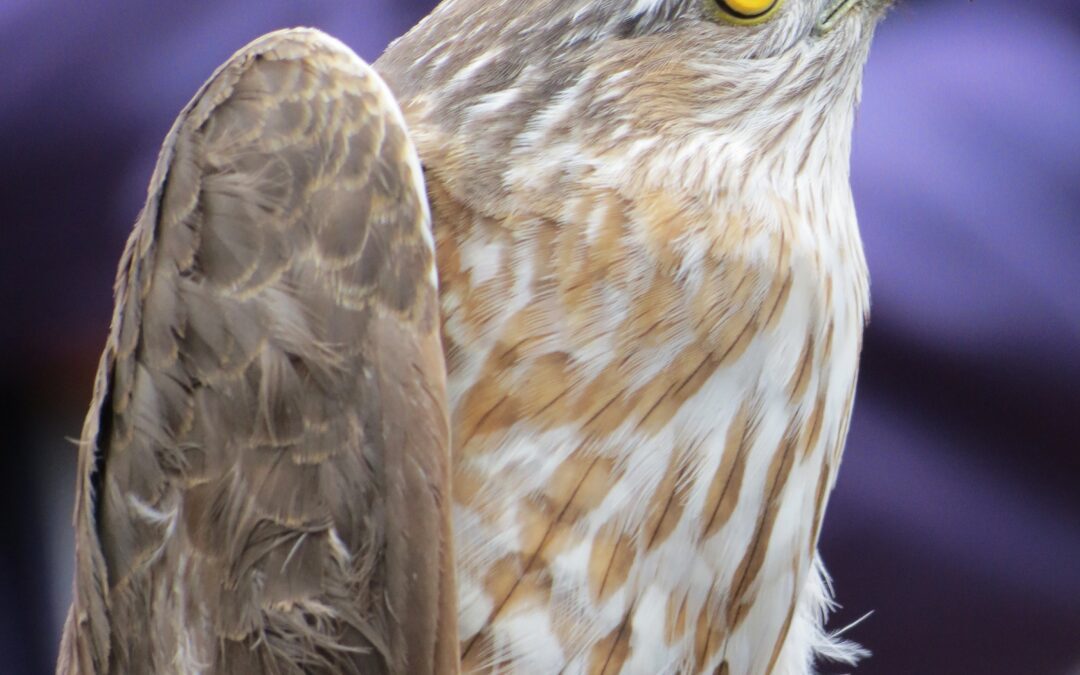
Sharp-shinned Hawk Project Update
Written by David Mathiason, Raptor Banding Director
During the spring of 2025, we deployed another 23 Motus tags on Sharp-shinned Hawks, as part of our research effort to understand the impact of capillaria on these birds. As of December 2025, 19 of those birds have been detected coming south for the winter. One of them flew into a glass panel 5 days after it was banded – we were able to recover the tag from that bird and will re-deploy it next spring. That leaves only 3 birds that we have not heard from this past fall. That return rate, 19/23 = 83% is an incredible return rate, and those other three birds might still get detected at a future date. (They are sneaky birds.) The pictures and text below share the stories of two birds from last spring.
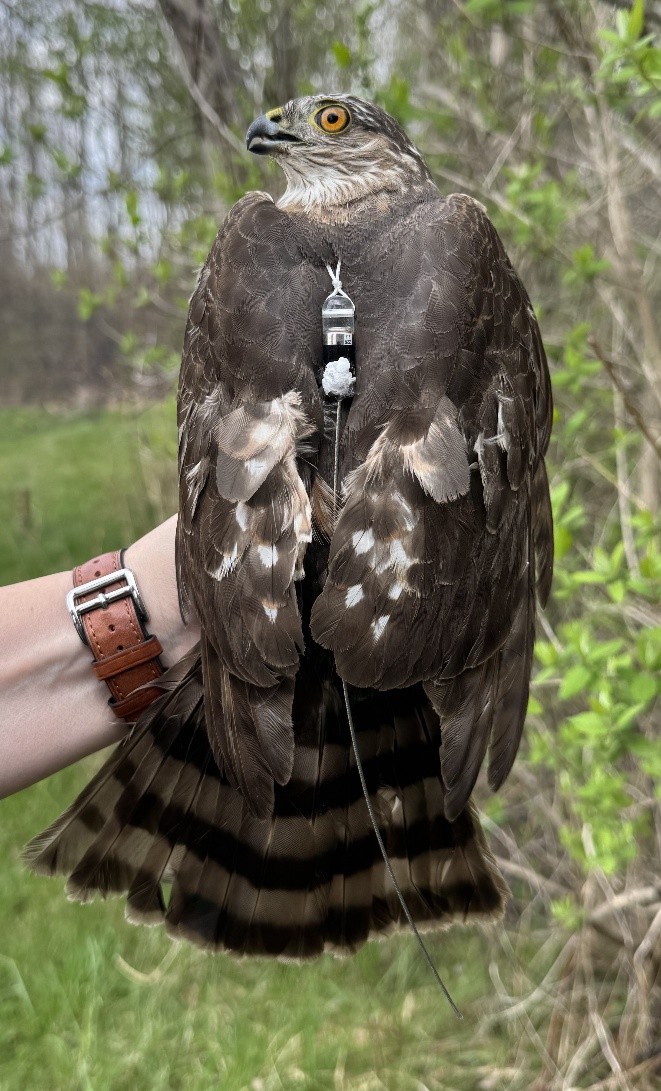
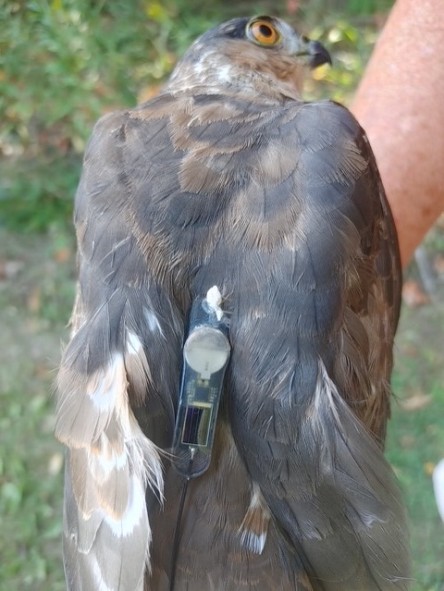
SSHA banded April 29, 2025, Motus ID #62475
Most of the hawks we band continue their journey eastward around Lake Ontario. This one decided to go west over the Niagara Peninsula before her last spring detection north of Ottawa on May 11. We don’t know how much further north she may have gone. On Sept 30, she was detected heading south at Bronte Creek Provincial Park, just north of Hamilton. From there she continued to the southeastern U.S. with her last detection (to date) being on Nov 4.
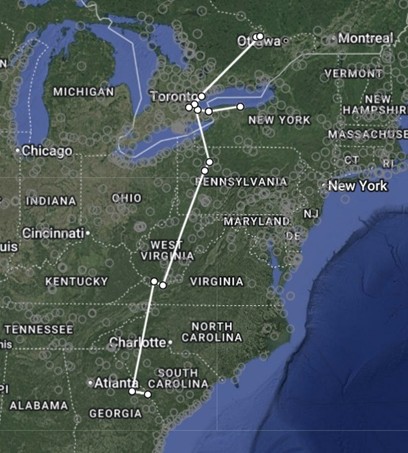
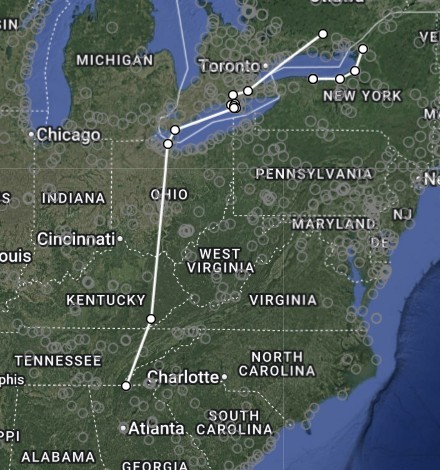
SSHA banded April 15, 2025, Motus ID #53201
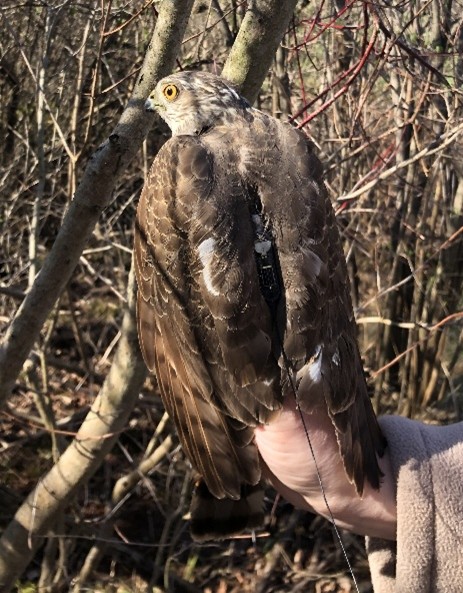
You can see on the map that this female went around Lake Ontario in the more common easterly direction. We cannot know how far north she went, but on Sept 11 she was detected coming south. She was detected by multiple towers in the area around Long Point on Sept 14, then captured two days later by the Hawk Cliff Raptor Banding Station west of there. On Sept 18 she crossed Lake Erie at Pt. Pelee and then continued south down to Georgia. It is typical that we stop getting detections once the bird has settled into its wintering area. We now have to wait and see what happens next spring. The second picture of her was taken by the crew who re-captured her in Canada. She is in the process of molting in her adult feathers and you can see the color contrast.
For more information on this study, go to our Sharp-shinned Hawk Project page.
Man-made Threats to Raptors
Raptors face numerous man-made threats, including power/waste/transportation infrastructure, secondary poisoning, and habitat disruption. By exploring these threats, highlighting mitigation techniques, and providing information on treatment options for injured birds, we aim to inspire viewers to take action to protect raptors. Learn about this topic that was presented at Bird of Prey Days 2025 by viewing the presentation here:
In the presentation you will find many links to resources on the various topics listed above.
The creator of this presentation, Bob Williams is dedicated to protecting and preserving the lives of birds of all shapes and sizes, but especially raptors. He has volunteered with Braddock Bay Raptor Research’s summer raptor count since 2021 and presented research related to weather impacts on red-tailed hawk natal dispersal at Birds of Prey Days 2024. He is also a founding member of the Bird Friendly City team in Kitchener, Ontario, working to mitigate local threats to all birds, protect natural habitats, and educate the community.
Some Came Back – Update on Sharp-shinned Hawks
Written by David Mathiason, Raptor Banding Director
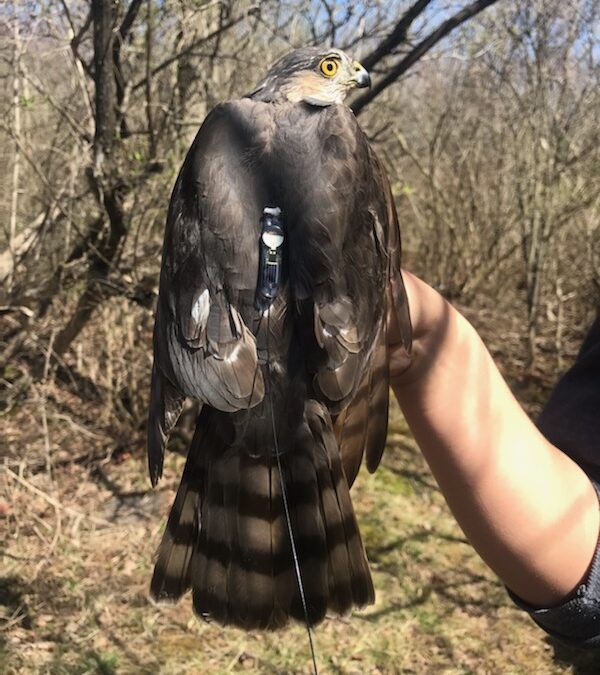
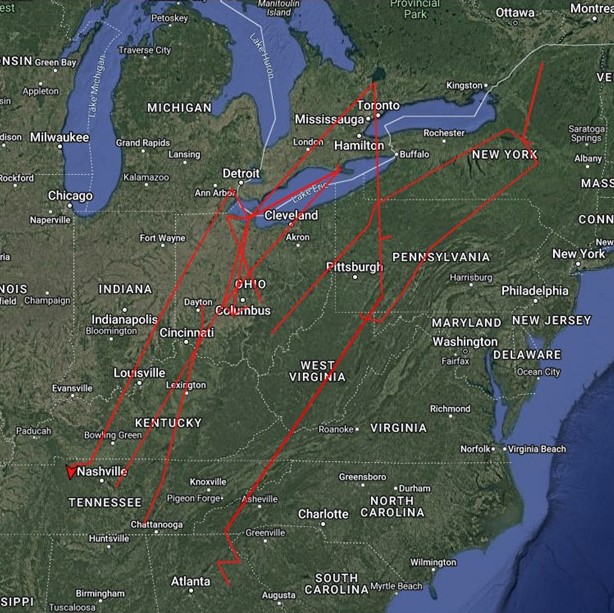
Last spring, members of the BBRR banding team attached CTT hybrid tag transmitters to 24 female Sharp-shinned Hawks during the migration season. We lost contact with these hawks as they crossed into Canada, likely due to a lower concentration of MOTUS towers for them to pass by. Therefore, we do not know where they went for the summer breeding season. All we could do was wait and see how many returned to the U.S. on their way back south. As of November 3, thirteen of these hawks have returned south during fall migration. Their routes all stayed west of the Appalachian Mountains, and they seem to be settling in the southeastern part of the United States. Some came down the east end of Lake Ontario, and one appears to have come down between Lake Ontario and Lake Erie. Many of these birds seem to have crossed Lake Erie at Point Pelee, Ontario. The algorithm for tracking simply connects the dots at towers where a bird was detected and does not provide accurate tracking for its entire trip. The map below shows the southward tracks for these birds.
One of the pressing questions about studying the capillaria infection in these birds is whether it has an impact on their survival. The data collected so far does suggest that it might, but we need more data to say anything definitive.
Transmitters are being attached to Sharp-shinned Hawks this fall at two other banding stations, one at Cedar Grove Ornithological Research Station in Wisconsin, the other at Hawk Ridge Bird Observatory in Minnesota. BBRR is working collaboratively with them both, hoping to shed some light on migration patterns and trying to determine if the capillaria infections are related to those patterns.
For more information on this study, go to our Sharp-shinned Hawk Project page.
Sharp-shinned Hawk Study Updates
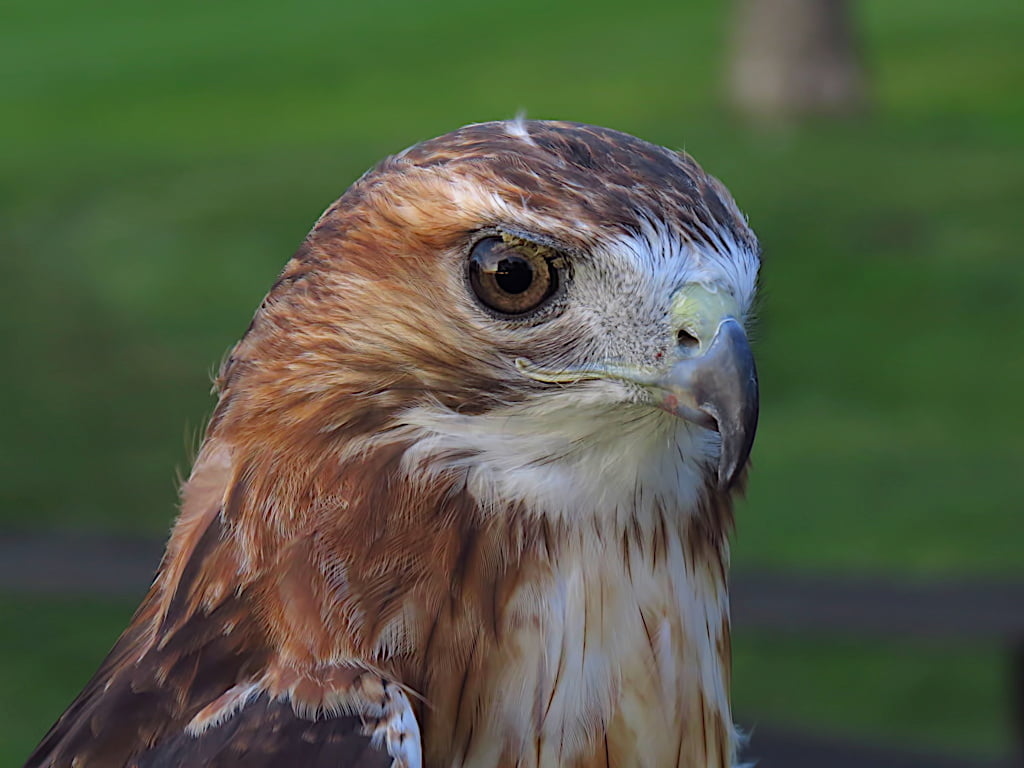
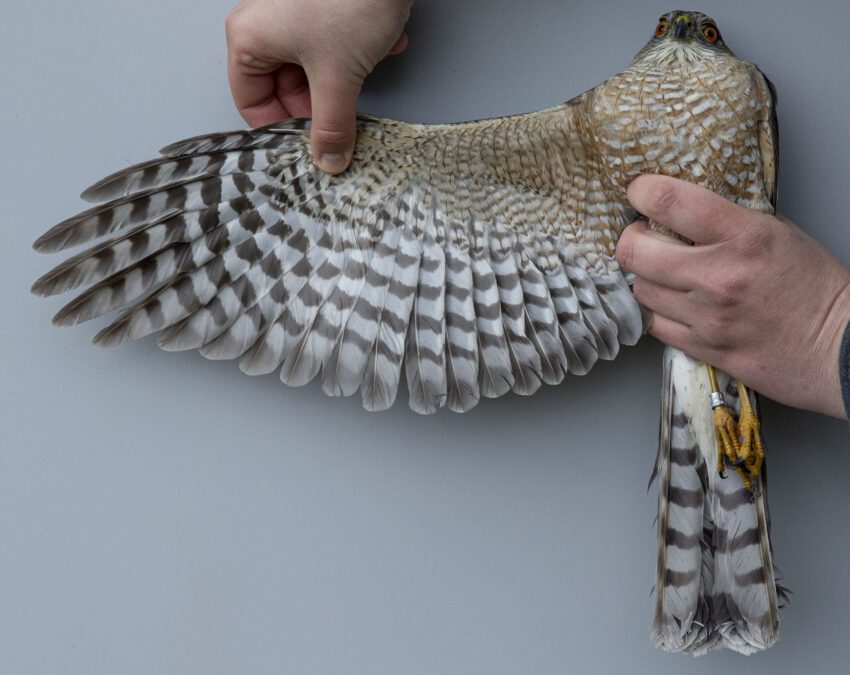
Photo above, taken by Eliana Heiser, is a Sharp-shinned Hawk from the 2022 spring banding season.
For the latest updates on the Sharp-shinned Hawk Study that BBRR banders have been participating in, go to our Sharp-shinned Hawk Study page.
This page will provide you with reports, information and resources for banders who wish to participate in the study. Now available is a summary report of the last three spring seasons by Braddock Bay Raptor Research, as well as the last three fall seasons from Cedar Grove Ornithological Research Station.
Raptor Education Course 2021
**As of 1/30/21 all registration spots for this course have been filled. If you would like to be on the waiting list for a possible cancellation, please email information@bbrr.org. We hope to offer the course again in the early summer. **
BBRR is excited to present the 2021 Raptor Education Course to begin in February. If you would like to get involved with BBRR as a volunteer, or if you simply have a great interest in raptors and want to learn more about them, this course is for you! The classes have been designed to prepare volunteers with background knowledge of raptors, the Braddock Bay area, and the field work of BBRR so that they may be better educators and ambassadors for the organization. The course is not a requirement for volunteers, but participation in it is highly recommended.
The 2021 version of the Raptor Education Course will consist of 5 online classes to be presented via Zoom. Topics to be covered will include BBRR history, hawk watching, raptor identification and natural history, raptor banding, and owl migration. A few classes will incorporate our education raptors as well. The course will also include field trips! There will be one virtual field trip planned about raptor banding, and two small group in-person field trips to different parts of Braddock Bay focusing on the owl migration and the hawkwatch.
This course is suitable for adults, but even teens with a great interest are encouraged to attend. Space is limited so register early to ensure your spot. The registration fee is $40 for non-members, or $25 for BBRR members and current volunteers. This fee covers all classes and field trips, and any materials distributed. Those individuals successfully completing all class requirements will be recognized as official BBRR Educators.
Evening Zoom classes will be held from 7:00-9:00 pm on the following dates: February 11 & 25, March 11 & 25, and April 8. Field trips will take place in March and April, and will be scheduled once the course begins in February. Field trips will be scheduled based on the number of participants and their availability.
Register here on our website. To register at the member/volunteer rate, contact us for the coupon code. If you have questions about the course, or may be interested in becoming a BBRR volunteer contact Daena Ford at information@bbrr.org or 585-267-5483.